Drip Edge, Valleys & Ice-and-Water Barrier: How a Roof Should Really Be Built
Most roof leaks don’t start in the middle of the field where the shingles are — they start at the edges, in the valleys, and around penetrations. That’s why the “boring” details matter more than the shingle color. Here are the three that make or break a roof in the North Carolina Triad.
1. Drip edge — the perimeter you never think about
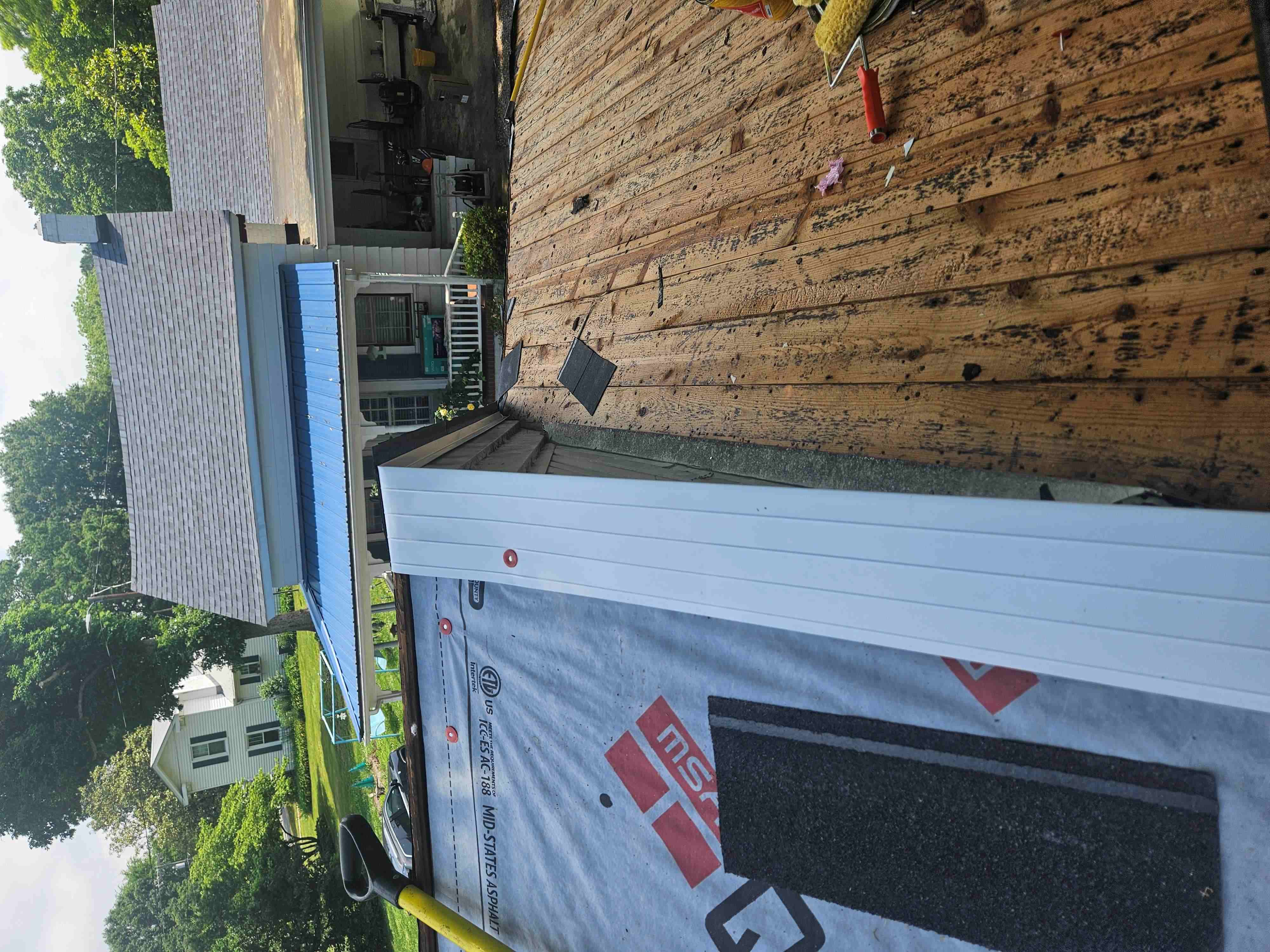
Drip edge is the metal flashing installed along the eaves and rakes that directs water off the roof and away from the fascia and decking. Skip it or reuse a corroded old one, and water wicks back under the shingles and rots the wood edge.
We install F8 drip edge where the build warrants it, rather than the shorter, more common F5. The taller face gives better coverage and a cleaner water break. And starter strip goes at both the eaves and the rake edges — not just the eaves — so wind can’t lift the perimeter shingles.

Here’s how those layers stack, edge to edge — drip edge at the very perimeter, ice-and-water barrier over the decking, underlayment over that, and shingles on top.
2. Valleys — where two roof planes fight over water
Valleys carry the most concentrated water flow on your entire roof. When a storm dumps rain, everything funnels there. That’s exactly why a valley needs the most protection, and why it’s the first place a cheap install fails.
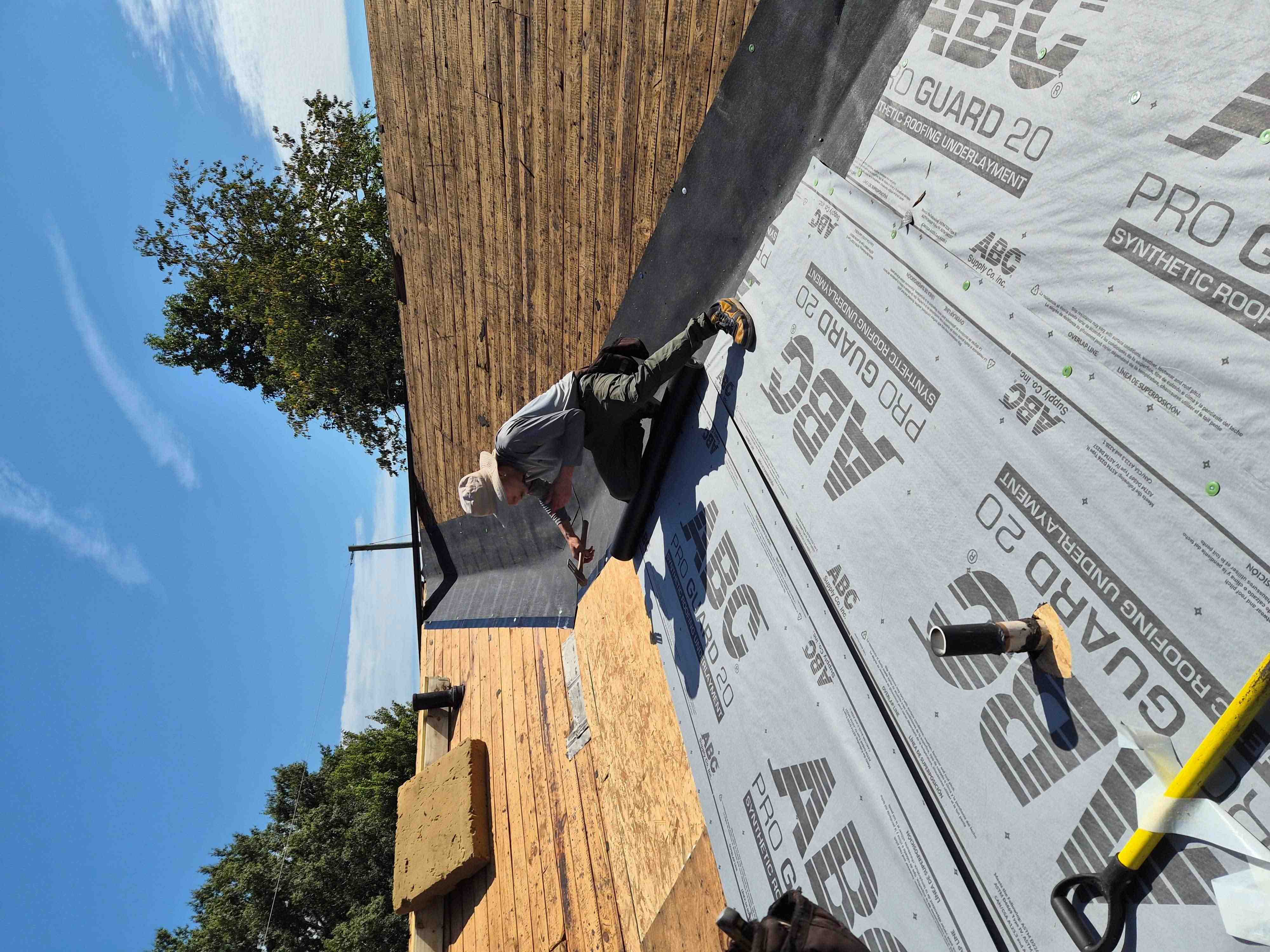
In every valley we install self-adhering ice-and-water barrier — a peel-and-stick membrane that seals around fasteners and creates a waterproof layer beneath the shingles. We do the same in low-slope sections and shaded areas where snow and ice linger and water backs up.
3. Fastening — button-cap nails, in the nail zone
Two quiet mistakes cause a shocking number of premature failures:
- Staples instead of nails for underlayment. Staples tear through and let go in wind. We use button-cap nails, which hold the underlayment down with a wide plastic cap that resists pull-through.
- High-nailing the shingles. Every shingle has a designated nail zone. Nail above it and you’ve compromised the wind seal on every course. We nail in the zone, every time.
Why this matters more than the brand of shingle
You can put a premium shingle over a bad install and still get a leaky, short-lived roof. You can put a mid-grade shingle over a great install and get decades of dry ceilings. The install is the roof.
The transparency difference
Because these details are invisible once the job is done, we show you the work as it happens with a live photo feed during installation, hand you a detailed material list up front, back it with a warranty of up to 20 years (each product carries its own), and finish with a magnetic nail sweep of your property.
Serving Winston-Salem, Greensboro, Kernersville, and High Point NC. Call (336) 505-7977 or request an inspection to see how your roof was — or should be — built.
Need this on your own roof?
Blue Hat Roofing serves Winston-Salem, Greensboro, Kernersville, and High Point NC. Get a free inspection and an honest assessment.